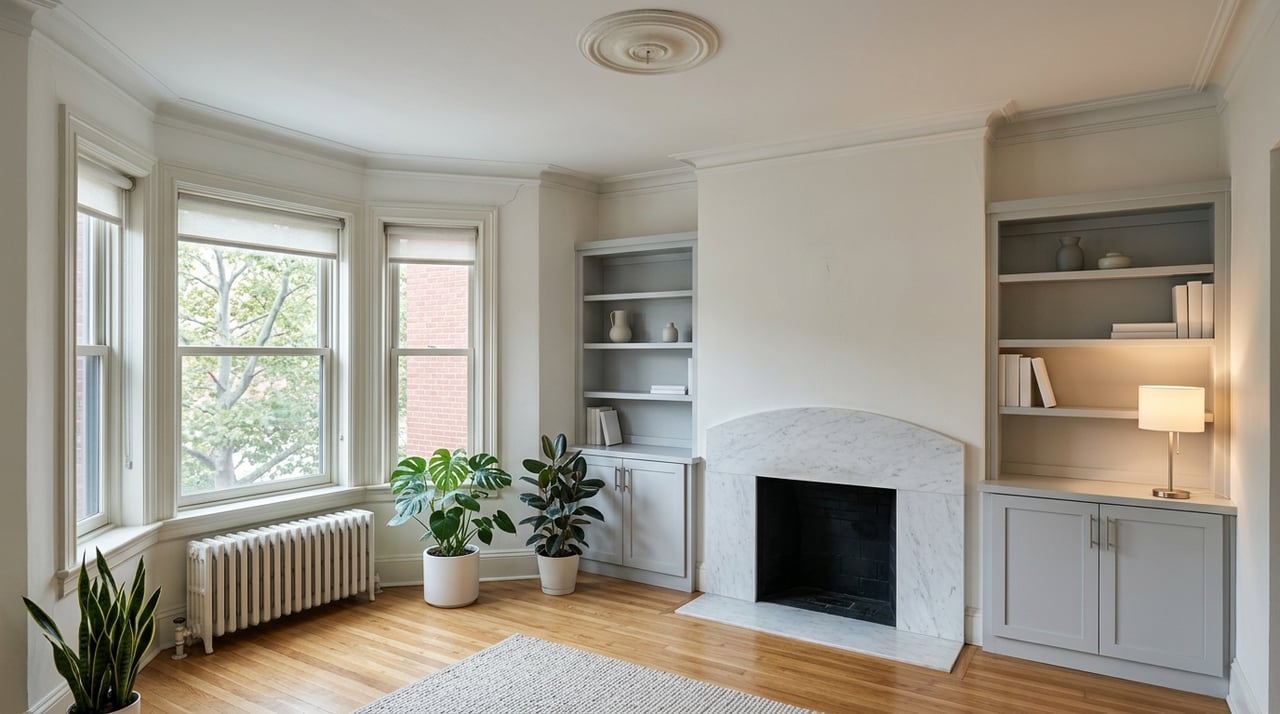
If you are condo shopping in Andersonville, one question tends to come up fast: do you want vintage character or new-construction convenience? It is a real tradeoff, and it matters even more in a neighborhood known for older building stock, walkable streets, and low-rise housing. The good news is that once you know what to compare, the choice gets much clearer. Let’s dive in.
Why this choice matters in Andersonville
Andersonville sits along the Edgewater and Uptown border, and that context shapes the condo market in a big way. Local housing data for those surrounding areas show an older, denser housing stock, with 43.4% of homes in Edgewater and 44.7% in Uptown built before 1940.
That older fabric is a big reason vintage condos are such a major part of the conversation here. CMAP data also show that 54.7% of housing units in Edgewater and 57.1% in Uptown are in buildings with 20 or more units, while the median year built is 1948 in Edgewater and 1947 in Uptown. In other words, if you are searching in Andersonville, you are usually choosing within a market shaped by older, established buildings, not a neighborhood dominated by brand-new inventory.
What counts as a vintage condo
In Andersonville, “vintage” usually means a converted two-flat, three-flat, courtyard walk-up, or older apartment building that was later divided into condos. These buildings often reflect the early-20th-century housing patterns that define much of this part of Chicago.
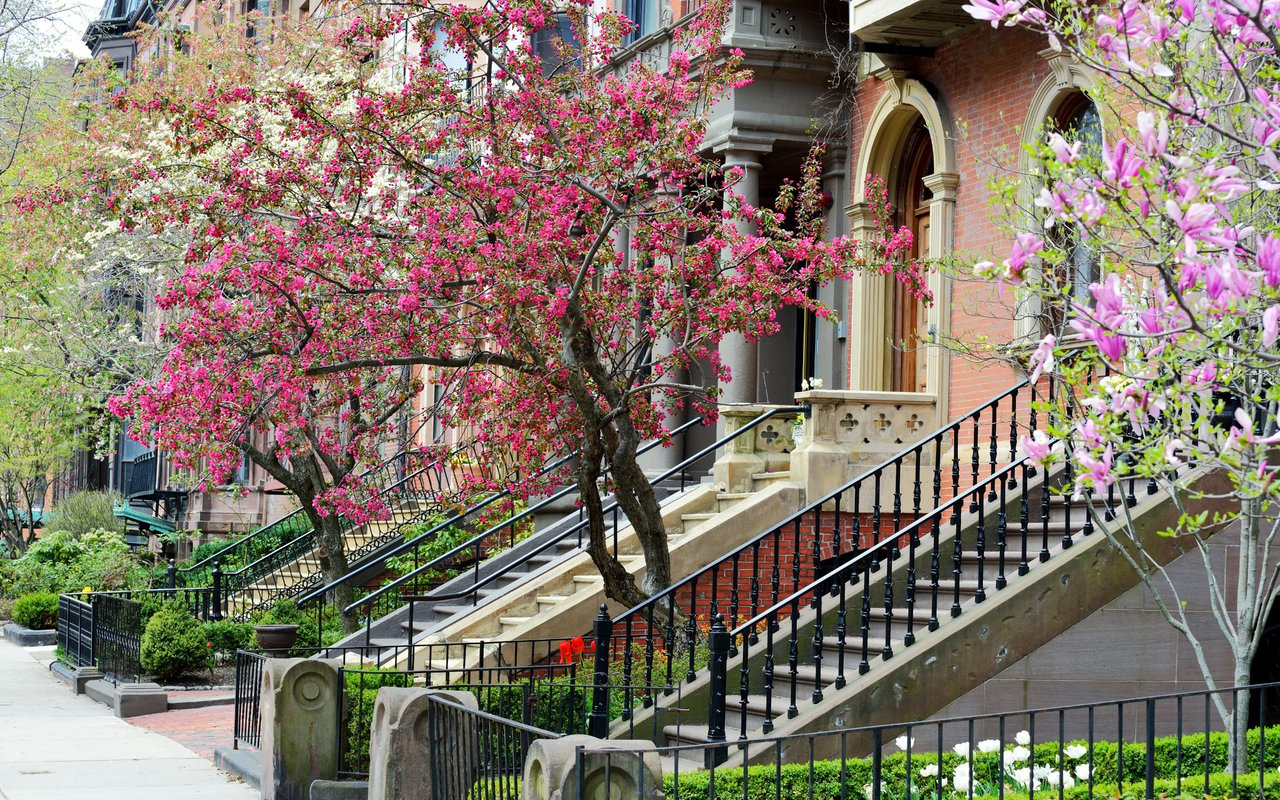
Chicago’s classic two- and three-flats were largely built between 1900 and 1920. Typical details include brick or greystone facades, bay windows, entry porches, and ornate cornices. Courtyard buildings from the 1910s and 1920s often have a more intimate scale too, sometimes sharing one entry with only a handful of households.
What buyers often love about vintage units
Vintage condos tend to stand out for their character, layout variety, and neighborhood feel. If you want original architectural detail, a lower-rise setting, and a home that feels distinct from unit to unit, vintage often delivers that better than newer product.
Many buyers also like the scale of these buildings. A small walk-up or converted flat can feel quieter and more personal than a larger building, even if it comes with fewer amenities.
What to watch in vintage buildings
The tradeoff is usually maintenance and predictability. Older buildings can mean more stairs, less accessibility, and more shared responsibility for aging common elements.
That makes association health a major part of the decision. Under Illinois law, condominium budgets must provide reasonable reserves for capital expenditures and deferred maintenance, so when you look at a vintage condo, you are not just buying the unit. You are also buying into the building’s maintenance history, reserve planning, and ability to handle future repairs.
What counts as new construction in Andersonville
Newer Andersonville condos are usually not high-rise towers. The local development pattern is more boutique and low-rise, with recent or proposed projects in the range of 6, 13, 15, 18, 27, and 39 units.
A recent local example included a four-story residential building with a masonry facade, elevator, large balconies, a rooftop deck, and an attached garage. That gives you a strong picture of the newer condo template in the neighborhood: modern, low-rise, and built around convenience.
What buyers often love about new construction
New-construction condos usually appeal to buyers who want easier day-to-day living. Elevator access, parking, private outdoor space, and more standardized building systems can make life simpler.
There is also often a sense of near-term predictability. While no building is maintenance-free, a newer roof, newer windows, and newer shared systems may feel less uncertain than an older building with a longer repair history.
What to watch in new buildings
New does not mean cost-free. Elevators, garages, rooftop decks, and shared amenity spaces all need ongoing funding.
That means higher monthly assessments are not automatically a red flag. In many cases, they reflect the real cost of maintaining the features that make the building attractive in the first place. The key question is whether the dues support both daily operations and healthy reserves.
Vintage vs new construction at a glance
| Factor |
Vintage condos |
New-construction condos |
| Building style |
Two-flats, three-flats, courtyard walk-ups, older condo conversions |
Boutique low-rise buildings, often 4 stories or so |
| Main appeal |
Character, architectural detail, layout variety |
Convenience, accessibility, modern features |
| Common tradeoff |
More upkeep focus, older shared systems, stairs |
More amenity-related costs and potentially higher dues |
| Typical features |
Historic details, intimate scale, lower-rise feel |
Elevator, garage, balconies, rooftop deck |
| Buyer focus |
Reserve health, capital work, maintenance history |
Assessment coverage, amenity costs, reserve planning |
How to compare monthly assessments the right way
One of the biggest mistakes buyers make is treating the monthly assessment like a simple pass-or-fail number. In Andersonville, that usually misses the bigger story.
Instead, think of the assessment as a window into risk, upkeep, and how the building is run. Illinois resale disclosures require associations to share details about reserve funds, financial condition, insurance coverage, pending lawsuits or judgments, and anticipated capital expenditures for the current or next two fiscal years.
In vintage buildings
You want to know whether the association can handle common repairs without surprise strain on owners. A lower monthly assessment may sound appealing, but it is not always a plus if the building is underfunding reserves or delaying needed work.
In a vintage condo, the stronger building is usually the one where upkeep is credible for its age. That means recent capital work, realistic budgeting, and a clear plan for future repairs.
In new-construction buildings
You want to know whether the dues truly support the building’s features. Elevators, garages, rooftop decks, and other amenities create ongoing costs, and those costs need to be reflected somewhere.
A higher assessment can be perfectly reasonable if it matches the services and systems you actually value. The bigger issue is whether the budget is realistic and the reserve funding is appropriate.
Which condo type fits your lifestyle?
The right answer often comes down to how you want to live, not just what looks best online. A beautiful vintage unit may be the perfect match if you care most about charm, lower-rise living, and unique floor plans.
On the other hand, a newer condo may fit better if you want easier access, more predictable systems, and features like parking, outdoor space, or an elevator. Neither option is automatically better. The better option is the one that matches your tolerance for upkeep, your budget, and your day-to-day priorities.
Vintage may be a better fit if you want:
- Original detail and architectural personality
- A smaller-scale building experience
- More layout variety
- A home that feels closely tied to Andersonville’s historic building fabric
New construction may be a better fit if you want:
- Elevator access or easier accessibility
- Parking or attached garage options
- Private outdoor space or shared rooftop amenities
- More standardized systems and a more predictable maintenance outlook
Smart questions to ask before you buy
No matter which style you prefer, your due diligence matters more than the label. A well-run vintage building can be a better buy than a poorly budgeted new one, and the reverse is true too.
As you compare options, ask questions that help you understand both present costs and future risk.
Questions to ask the association
- What major repairs or replacements are expected in the current or next two fiscal years?
- How much is in reserves?
- Has the association ever waived reserve funding?
- What does the monthly assessment cover?
- Are there pending lawsuits, judgments, insurance gaps, or known building-system issues?
- Does the building have an elevator, garage, roof deck, or other amenity that adds ongoing shared costs?
The resale angle in Andersonville
Andersonville has a strong historic identity, and that supports demand for homes with character. At the same time, the active pipeline of boutique new buildings shows there is also a real market for low-rise, newer product.
That means resale is often less about choosing the “right” category and more about choosing the right building within that category. In this neighborhood, buyers tend to respond to walkability, sensible fees, useful layouts, and a building whose upkeep makes sense for its age and features.
A standout vintage condo is usually one with real character and a believable maintenance story. A standout new-construction condo is usually one where the amenities feel worth the dues and the building offers the convenience buyers expect.
Final thoughts on choosing between the two
In Andersonville, vintage condos are often about charm, intimate scale, and architectural detail. New-construction condos are usually about convenience, accessibility, and a fuller amenity package.
The best choice is not the one that wins in a general comparison. It is the one that fits your lifestyle and gives you confidence in the building behind the unit. If you want help comparing vintage and newer condos block by block in Andersonville, Cadence Realty offers concierge-level guidance tailored to how you want to live.
FAQs
What is considered a vintage condo in Andersonville?
- In Andersonville, a vintage condo usually means a converted two-flat, three-flat, courtyard walk-up, or older apartment building that was later divided into condos.
Are vintage condos more common than new construction in Andersonville?
- Yes. The surrounding Edgewater and Uptown housing data show a large share of older housing stock, which helps explain why vintage condos are such a common part of the Andersonville market.
Are new-construction condos in Andersonville mostly high-rises?
- No. Recent and proposed Andersonville projects are generally boutique, low-rise buildings rather than tower-scale developments.
What should buyers review in an Illinois condo association budget?
- Buyers should review reserves, anticipated capital expenditures, what the monthly assessment covers, the association’s financial condition, insurance coverage, and any pending lawsuits or judgments disclosed in the resale documents.
Are higher condo assessments always a bad sign in Andersonville?
- Not necessarily. In vintage buildings, lower dues can still be risky if reserves are weak, and in new buildings, higher dues may reflect real costs for amenities like elevators, garages, and rooftop decks.
Which has better resale potential in Andersonville: vintage or new construction?
- Both can resell well. In Andersonville, resale often depends more on walkability, layout, sensible fees, and the building’s upkeep than on whether the condo is vintage or newly built.