If you love Lake View’s energy but do not want to hear it every night, you are not alone. Many buyers want the restaurants, transit, lakefront, and neighborhood convenience without living right on the busiest stretches near Wrigley Field or major commercial corridors. The good news is that Lake View is not just one lifestyle, and some of its best fits are the quieter interior blocks tucked close to the action. Let’s dive in.
Why quiet in Lake View is block by block
Lake View is one of Chicago’s 77 community areas, but it functions more like a collection of micro-areas with very different day-to-day feels. According to DePaul’s housing data for Lake View, the neighborhood is dominated by condos and larger multi-unit buildings, with only a small share of single-family homes.
That matters because your experience here often depends less on the broad neighborhood name and more on your exact street. In general, the quietest corners are the interior residential blocks that sit one step away from the busiest corridors, nightlife clusters, and the Wrigley Field area.
Why the Wrigley area feels busiest
If you are trying to avoid the loudest parts of Lake View, it helps to know where activity concentrates. Choose Chicago’s overview of Wrigleyville and the neighborhood planning documents describe this area as one of the most event-driven parts of Lake View, with sports bars, visitor traffic, and game-day crowds shaping the atmosphere.
The contrast is especially clear around Wrigley Field, where neighborhood plans have long pointed to issues like noise, traffic, parking, and litter during busy event periods. The Cubs and the city also maintain a neighborhood protection program focused on traffic, parking, public safety, and cleanup, which tells you how active this area can be.
That does not make Wrigleyville a bad fit. It just means that if your priority is a calmer home base, you will likely want to look a few blocks away rather than in the center of the action.
Central Lake View offers classic quiet streets
For many buyers, Central Lake View is the clearest answer to the question, “Where can I get a quieter residential feel in Lake View?” The 44th Ward master plan describes Central Lake View, bounded by Belmont, Diversey, Halsted, and Racine, as a quiet residential area with many single-family homes and courtyard apartment buildings.
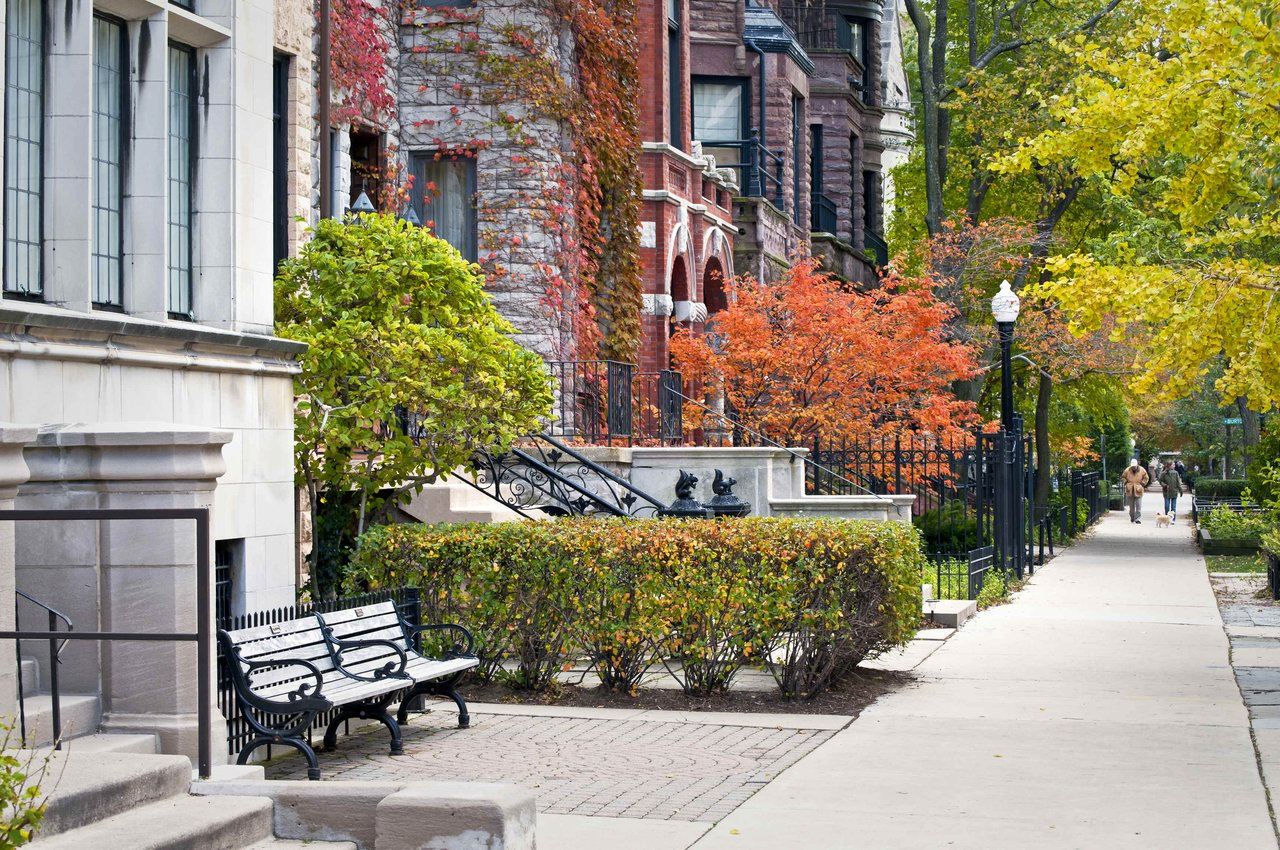
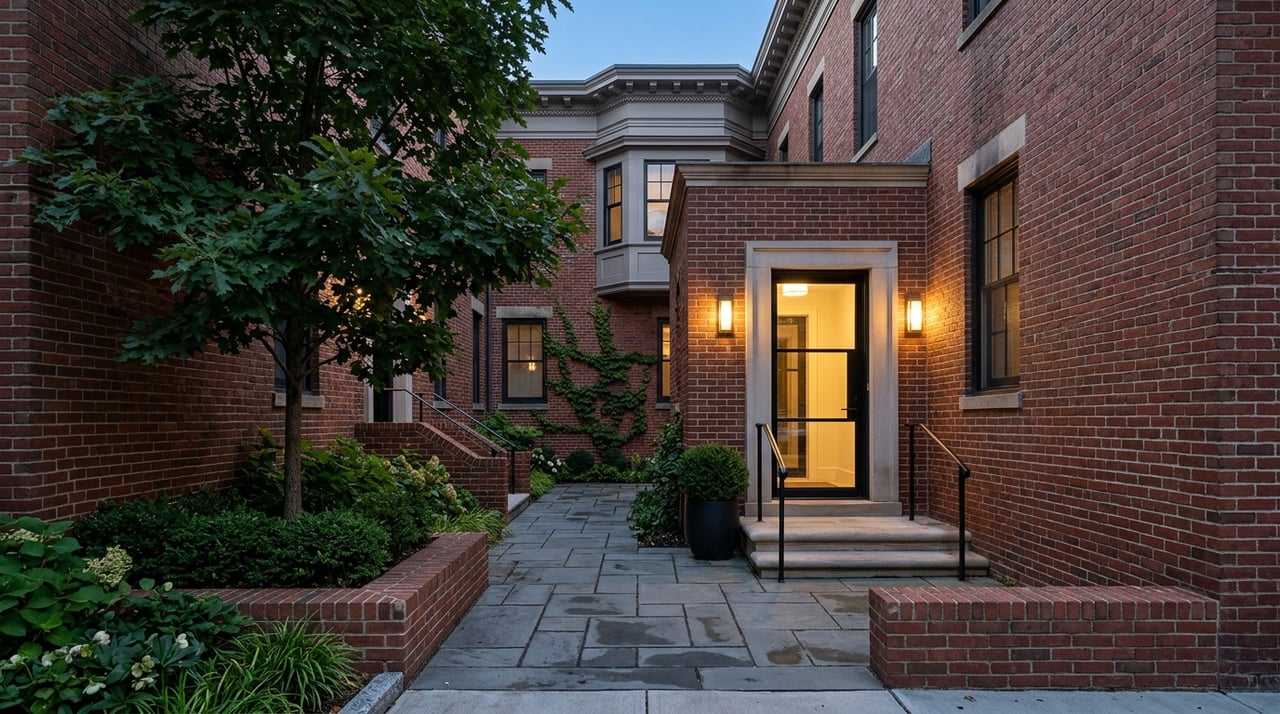
You also see a housing mix here that feels especially classic Chicago. The plan highlights early 1900s brick and stone homes, 1920s 2- to 4-flats, and coach houses tucked behind street-facing properties. If you like mature residential blocks, older architecture, and a lower-key rhythm, this pocket stands out.
Central Lake View can work well if you want:
- A classic residential setting
- Older housing stock with character
- Interior blocks that feel calmer than major corridors
- Access to Lake View amenities without being at the center of event activity
For downsizers and buyers who want a more residential streetscape, this part of Lake View is often worth a closer look.
West Lake View balances calm and convenience
West Lake View is another strong option if you want quieter streets without giving up urban convenience. West Lakeview Neighbors defines this area as bounded by Belmont, Addison, Southport, and Ravenswood.
Neighborhood planning materials describe West Lake View as a mix of single-family homes, mixed-use buildings, loft conversions, and businesses. Just as important, the area is noted for blending comfortable urban living with a small community atmosphere.
That makes West Lake View a useful middle ground. You can stay close to shopping, dining, and transit while still focusing your search on side streets and interior blocks that feel more residential.
This area may suit you if you want:
- A quieter home base with nearby services
- A mix of housing types
- Good day-to-day walkability
- A location that feels connected but not overly busy
For professionals and repeat local buyers, this balance is often a big part of the appeal.
Southport, Hawthorne, and Sheil Park shine
If you want walkability and neighborhood activity without living in the loudest part of Lake View, the Southport cluster deserves real attention. According to Southport Neighbors Association, this broader area includes Southport, Hawthorne, and Sheil Park, each with a slightly different housing pattern but a shared appeal for buyers who want calmer residential streets near popular amenities.
Southport itself is known for oversized lots, Victorian homes, and former 2- and 3-flats that have increasingly been converted to single-family homes. Southport Avenue is a pedestrian-oriented street with boutiques, restaurants, cafes, and theaters, so you can enjoy neighborhood activity and then step back onto quieter side streets.
Hawthorne, bounded by Addison, Belmont, Clark, and Racine, includes single-family homes, 2- and 3-flats, multi-unit buildings, and townhouses. The planning documents note that one-way streets help keep car traffic lower on side streets, which can make a meaningful difference in how a block feels.
Sheil Park, bounded by Addison, Belmont, Racine, and Southport, mixes newer and older frame and masonry buildings, with many Greystones in the housing stock. For buyers who want a residential feel close to major neighborhood draws, this is one of the more compelling parts of Lake View.
This cluster can be a strong fit if you want:
- Walkability to shops and dining
- Calmer side streets than the busiest entertainment zones
- A range of home styles, from condos to single-family homes
- A practical balance between activity and privacy
East Lake View is quieter in a different way
East and lakefront-adjacent Lake View are worth considering, but for a different kind of quiet. The 44th Ward master plan describes South East Lake View as mostly pre-World War II housing, with vintage and modern high-rises and mid-rises near the lakefront and smaller apartment and condo buildings farther west.
This is generally a more urban environment than Central Lake View or the interior Southport pockets. Still, it can be a strong fit if your priority is condo inventory, shoreline access, and proximity to the lake rather than the lowest-noise streets in the neighborhood.
In other words, this is often the better choice for quiet-ish condo living rather than a tucked-away house-on-a-side-street feel. If you want to be near the water and enjoy a building-focused lifestyle, East Lake View may check the right boxes.
The lakefront is Lake View’s best relief valve
One of Lake View’s biggest advantages is that even when you live in an active part of the neighborhood, you still have access to quieter public space. The Chicago Park District’s Lakefront Trail page notes that the trail runs from Ardmore to 71st Street, with separate bike and pedestrian paths along much of the route.
That lakefront access changes the way many people experience East Lake View and nearby areas. Even if your building sits in a denser part of the neighborhood, you are often just minutes from shoreline paths, open space, and a quieter outdoor setting that helps balance the urban pace.
Match the pocket to your lifestyle
The best quiet corner in Lake View depends on what “quiet” means to you. If you want lower street noise and a more traditional residential feel, interior blocks in Central Lake View, West Lake View, and the Southport, Hawthorne, and Sheil Park areas are often the strongest places to start.
If you are open to a more urban setting and want the lakefront nearby, East Lake View may be a better fit. Lake View’s housing mix also supports a wide range of needs, from condos and multi-unit buildings to a smaller number of single-family homes, which is one reason the neighborhood works so well for singles, couples, downsizers, and buyers who prefer a car-light lifestyle, according to local housing and household data.
A simple way to think about it is this:
| Priority |
Best-fit Lake View pockets |
| Classic residential feel |
Central Lake View |
| Quiet plus convenience |
West Lake View |
| Walkability without peak Wrigley noise |
Southport, Hawthorne, Sheil Park |
| Condo living near the shoreline |
East Lake View |
How to shop for a quieter home
When you tour Lake View, try to evaluate more than the unit itself. In a neighborhood with this much variety, one or two blocks can change the feel in a big way.
Here are a few smart things to watch for:
- Whether the home sits on an interior block or a major corridor
- How close it is to Wrigley Field and event-heavy streets
- The surrounding building types, such as single-family homes, courtyard buildings, or larger high-rises
- Whether nearby streets are one-way or carry through traffic
- How important lakefront access, dining, or transit is compared with lower street activity
That kind of block-level strategy can help you find a home that feels like your version of Lake View, not just the neighborhood’s headline reputation.
If you want help narrowing down the right pocket, Cadence Realty offers concierge-level guidance built around how you actually want to live, from quieter side streets to condo-heavy lakefront options.
FAQs
Which part of Lake View is considered the quietest?
- Central Lake View is one of the strongest options for a quieter residential feel, especially on interior blocks away from the busiest corridors.
Are there quiet streets near Southport Corridor in Lake View?
- Yes. The Southport, Hawthorne, and Sheil Park areas include quieter side streets that sit close to shops and restaurants without being in the center of the busiest activity.
Is East Lake View a good fit if you want less noise?
- East Lake View can work well if you want condo living and lakefront access, but it is generally a more urban setting than the quieter interior residential pockets farther west.
What makes the Wrigley Field area noisier than other parts of Lake View?
- The Wrigley Field area sees concentrated event traffic, nightlife activity, parking demand, and larger crowds, especially during games and major events.
What housing types are most common in Lake View?
- Lake View is dominated by condominiums and larger multi-unit buildings, with a smaller share of 2- to 4-unit properties and relatively few single-family homes.
How can you find a quiet home in Lake View without losing walkability?
- Focus on interior residential blocks in areas like West Lake View, Central Lake View, and the Southport cluster, where you can stay near amenities while avoiding the busiest streets.