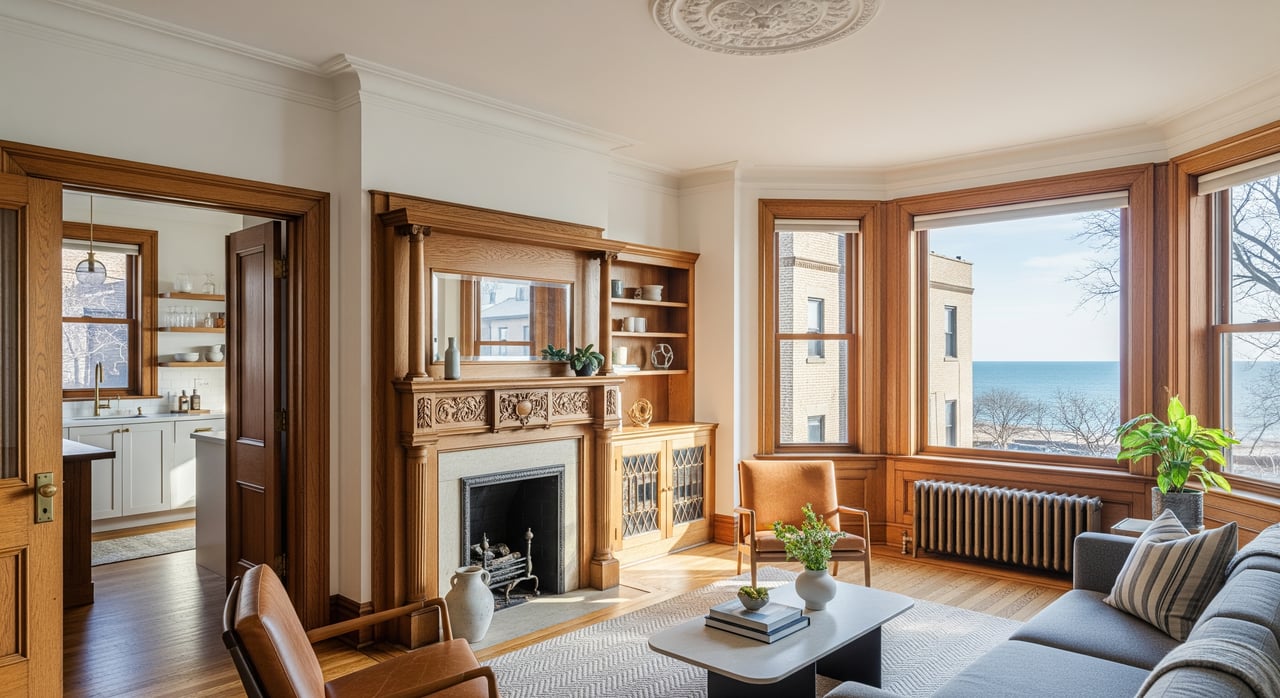
Is your Rogers Park condo rich with vintage character but tough to price? You are not alone. Buyers love charm, yet they also weigh HOA fees, upcoming projects, and the cost of vintage repairs. A smart list price blends all of that, not just square footage and bedrooms.
This guide walks you through a practical, step-by-step method to set a pricing strategy that reflects true market value and gets attention from serious buyers. You will learn how to use vintage-aware comps, read HOA finances like a buyer, factor in your unit’s condition, and account for building maintenance and financing rules. Let’s dive in.
What drives value in vintage units
Vintage Rogers Park condos can span early 20th century walkups to mid‑century conversions. The features that tend to influence price include original hardwood, moldings, built‑ins, high ceilings, and historic facade materials. These elements can boost demand when they are authentic and well cared for.
At the same time, outdated systems can hold you back. Original windows that leak heat, older electrical or plumbing, or a worn roof will push buyers to discount for risk and future cost. Floor level, layout, presence of an elevator, parking, storage, laundry, and outdoor space also affect value.
- Premium potential: well preserved period details paired with functional systems.
- Price risk: deferred capital items such as windows, electrical panels, boiler, or plumbing stacks.
Build vintage-aware comps
Start with the most predictive sales:
- Tier A: Same building, same or near‑identical floor plan, sold in the last 6–12 months.
- Tier B: Nearby buildings of similar vintage and amenities, sold in the last 3–6 months.
- Tier C: Broader Rogers Park context for trends, sold in the last 6–12 months.
Pull data from your agent’s MLS (MRED) and verify sale dates and tax history with Cook County public records. Note each comp’s sale price, date, square footage, beds and baths, floor and exposure, elevator, parking, HOA fee, renovation level, and any disclosed special assessments.
Adjust your comp prices for:
- Square footage and bed/bath count.
- Floor level and natural light.
- Parking and in‑unit laundry.
- Condition and renovation level.
- Presence or absence of vintage character vs. modern finishes.
This yields a comp‑derived range before you apply building and financing adjustments.
Read your HOA like a buyer
HOA health directly shapes price and the buyer pool. A strong reserve balance, clear budgets, and steady maintenance support confident pricing. Thin reserves, unclear plans, or pending projects can reduce demand.
Gather and review:
- Current monthly assessment and what it covers.
- Most recent reserve study and reserve balance.
- Two years of budgets and income/expense statements.
- Last 12 months of board minutes.
- Any pending or potential special assessments and capital projects.
How to translate HOA findings into price:
- Pending special assessment: reduce list price by the buyer’s expected share if you will not pay it, or offer a credit at closing for transparency.
- Underfunded reserves with likely projects in 1–3 years: estimate the probable cost to buyers and discount for that risk.
- Higher‑than‑typical monthly fees vs. comps: reflect the higher carrying cost in pricing.
- Strong reserves and professional management: price near the top of your comp range.
Community Associations Institute guidance provides industry standards for reserve planning, which your agent can use to interpret whether reserves are likely adequate for your building’s age and systems.
Weigh unit condition and repairs
Separate cosmetic from capital items. Fresh paint and lighting help with showability. Capital items like windows, electrical, plumbing, HVAC, roof leaks, or structural concerns influence financing and safety, and often require price concessions.
For vintage units, pay close attention to:
- Electrical: panel capacity and any outdated wiring.
- Plumbing: remaining life of stacks and signs of prior leaks.
- Windows: energy performance and condition of original frames.
- HVAC and boilers: age, service history, and efficiency.
- Pre‑1978 lead‑based paint considerations and required disclosures.
Price translation:
- If you will not make repairs, reduce list price by credible contractor estimates for capital items, or provide a buyer credit at closing.
- If you complete high‑impact upgrades before listing, you may justify the upper end of the range. New kitchens and baths can command a premium if well executed and aligned with buyer tastes.
- Remember buyer inconvenience and perceived risk. Serious building or system issues may require a larger concession than the direct repair cost.
Check building maintenance history
A building’s track record is a proxy for risk. Review recent and planned capital projects and how they were funded.
Look for:
- Roof, tuckpointing, facade or masonry work.
- Elevator modernization or boiler replacement.
- Frequency and size of special assessments.
- Professional management versus volunteer board.
Repeated special assessments or visible deferred maintenance narrow the buyer pool and can lead lenders to scrutinize the project. A building with steady, transparent maintenance and predictable budgeting supports stronger pricing.
Understand financing and buyer pool
Condo project eligibility matters. Conventional and government loans use project guidelines that review reserves, owner occupancy, unpaid assessments, and pending litigation. If a project is flagged as ineligible or limited for standard financing, your buyer pool shrinks to cash or portfolio loans.
Fewer eligible buyers often means lower achievable price and longer time on market. The impact can be meaningful in some projects. Your agent and a local appraiser can gauge the effect using current neighborhood data.
Follow a step-by-step pricing method
Use a clear, transparent process so you can defend your price and attract serious buyers.
- Build comps and set a baseline
- Create a comp set using Tier A, B, and C.
- Adjust for square footage, level, amenities, condition, and vintage features.
- Establish a baseline range before building and financing adjustments.
- Adjust for HOA finances
- Subtract the buyer’s share of any pending assessment, or decide to pay or credit it at closing.
- Discount for underfunded reserves if major projects are likely within 1–3 years.
- Compare your monthly HOA fee to similar buildings and reflect the carrying cost difference.
- Adjust for unit condition
- Itemize capital repairs with contractor estimates.
- Reduce price by the repair total if you are selling as‑is, or plan credits.
- Consider selective pre‑listing improvements if the likely return and timeline make sense.
- Adjust for building maintenance risk
- Apply a conservative discount if the building shows a pattern of deferred maintenance or frequent special assessments.
- Use a premium within your range for buildings with strong project history and clear governance.
- Consider financing constraints
- If project eligibility will limit conventional or government loans, expect fewer buyers and negotiate accordingly.
- Work with your agent to quantify the local impact before finalizing price.
- Set list price and strategy
- Present three options: aggressive list, market list, and conservative list.
- Tie each option to expected days on market, show volume, and likelihood of price reductions.
- Keep a clear worksheet that shows comps, assessments, repair estimates, HOA fee comparison, and financing notes.
A simple way to frame it:
- Adjusted list price = vintage‑adjusted comp median, minus your share of any special assessment, minus capital repair estimates, minus a building‑risk discount, plus a premium for exceptional period features or recent high‑value renovations.
Practical rules of thumb
- The best comp is the same floor plan in your building within the last year.
- Always translate special assessments into a clear dollar impact for buyers and disclose.
- Round up repair estimates to cover vintage contingencies and avoid renegotiation later.
- If you sell as‑is, price below renovated units to reflect risk and upgrade costs.
- If you can pay or credit your share of a known assessment, you may support a higher list price and smoother financing.
Quick checklist and next steps
Gather these documents before you list so buyers and appraisers can validate your price:
- Seller property disclosure and any past inspection reports.
- HOA declaration, bylaws, and rules.
- Current HOA fee schedule and what is included.
- Most recent reserve study and reserve balance statement.
- Two years of HOA financials and budgets.
- Last 12 months of board minutes and a list of pending capital projects or assessments.
- In‑unit improvements with permits, if any.
- Recent comparable sales from MLS, with notes on condition and building features.
With these in hand, you can price with confidence, anticipate objections, and keep negotiations focused on facts instead of guesswork.
Work with a local, boutique team
Rogers Park vintage condos reward careful pricing and clear communication. When you combine vintage‑aware comps, transparent HOA analysis, realistic repair math, and smart strategy, you set the stage for strong offers and a smoother closing.
If you want a tailored plan for your unit’s features, HOA, and building history, schedule a concierge consultation with Cadence Realty. Our team pairs hyperlocal North Side expertise with modern pricing tools so you can list with confidence and move at your pace.
FAQs
How should I price a Rogers Park condo with a pending special assessment?
- If you will not pay it, reduce your list price by the buyer’s expected share or offer a clear closing credit, and disclose the documentation.
Do vintage features justify a premium when selling in Rogers Park?
- Yes, if period details are authentic and in good condition, and key systems are functional; otherwise buyers often discount for needed upgrades.
How do HOA reserves influence my list price for a vintage condo?
- Strong reserves and clear plans support pricing near the top of your comp range; thin reserves or unclear projects warrant a discount for risk.
What repairs should I handle before listing a vintage condo?
- Prioritize capital items that affect safety or financing such as electrical, plumbing, windows, and evidence of leaks; cosmetic updates can follow.
How can financing rules affect the price of my Rogers Park condo?
- If your building has eligibility issues that limit conventional or government loans, the buyer pool shrinks and achievable price often softens.