Picture this: it is a January morning on the lakefront, the wind is sharp, and your dog needs to go now. If you live in the right Edgewater condo, that quick relief trip or after‑work romp can be easy, warm, and clean. As more buyers prioritize pet comfort, buildings that truly support dog owners stand out. In this guide, you will learn which amenities matter most, how to read HOA rules, and a smart process to compare Edgewater condos with confidence. Let’s dive in.
Why Edgewater fits dog owners
Edgewater offers a mix of vintage mid‑rises, classic high‑rises, and newer boutique condos near beaches, parks, and transit. That mix gives you options, whether you want a full amenity building or a quieter property with thoughtful pet features. Nationally, about 70% of U.S. households own a pet, and dogs lead the way. In a walkable, outdoor‑oriented neighborhood like Edgewater, pet‑friendly details can be a real differentiator.
Must‑have dog amenities
On‑site dog runs
A building dog run is a fenced space where dogs can be off leash for quick exercise. Look for adequate size and a layout that allows movement, not just a narrow strip. Turf with proper drainage is easier on paws and cleaner than plain concrete. Check lighting, posted hours, access control, and how often staff sanitize the space.
- Pros: fast exercise without leaving the property, especially helpful in winter.
- Cons: noise and odor if cleaning or rules are inconsistent.
Pet wash and grooming rooms
A pet spa keeps muddy paws and shedding out of your unit. The best rooms have non‑slip floors, an elevated tub, hot and cold water, strong ventilation, storage, and clear rules. Ask about reservations, cleaning expectations, and who pays for upkeep.
- Pros: saves time and keeps your bathroom clean.
- Cons: occasional misuse and repair costs if poorly managed.
Indoor relief areas
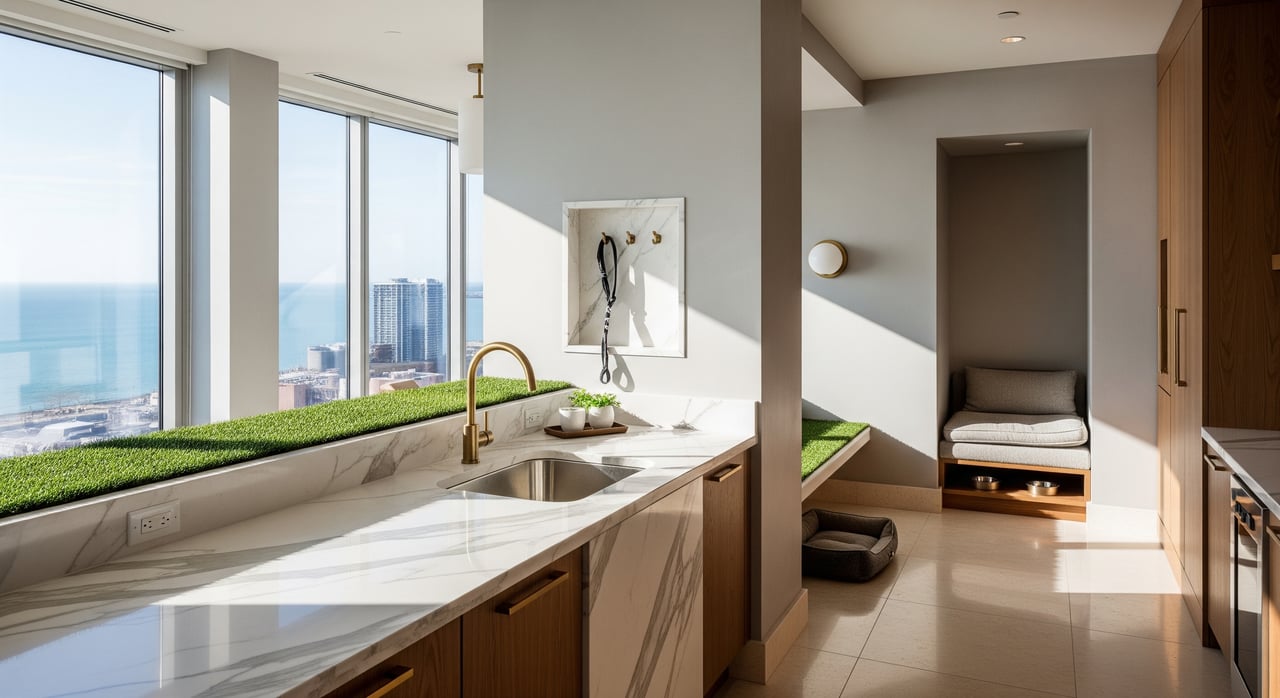
Some buildings provide indoor turf pads or tray systems for quick relief during extreme weather. These areas need frequent cleaning, good ventilation, and scheduled replacements of turf or pads. If you tour, do a simple smell test and look for drains and hose bibs.
- Pros: high convenience during storms or late nights.
- Cons: heavier maintenance and potential odor concerns.
Waste stations and bag dispensers
Simple waste stations near exits and dog runs reduce mess and support responsible ownership. Ask how often bins are emptied and who handles the schedule. Small touches like leash hooks, boot scrubbers, and water bowls at entrances add real day‑to‑day value.
Pet elevators and access protocols
Large buildings may have service elevators or designated pet times to reduce crowding. Confirm whether pets must be carried on certain floors or kept to specific elevators. Clear policies help keep everyone comfortable in shared spaces.
In‑unit pet‑friendly features
Inside your condo, durable flooring like vinyl or tile stands up to claws and water bowls better than soft hardwoods. Mudroom storage near the entry makes leashes and towels easy to grab. If you have a balcony, check rail spacing and any rules about screens or enclosures for safety.
On‑site vendor partnerships
Some properties partner with groomers, walkers, or trainers for scheduled visits. Ask how access works, whether vendors are insured, and how appointments are booked. The convenience can be excellent if the building’s policies are clear.
HOA and legal rules to know
Where pet rules live
Before you fall in love with a building, review its governing documents. The declaration, bylaws, and rules and regulations tell you what animals are allowed, how many, any size or breed limits, and fees or deposits. Check for a pet addendum and the last 12 months of board meeting minutes for rule changes or enforcement trends.
Illinois and federal basics
Condo associations in Illinois operate under the Illinois Condominium Property Act, which outlines board powers and rule adoption. The Fair Housing Act requires reasonable accommodations for people with disabilities who need assistance animals. Assistance animals are not treated as pets and are often exempt from pet bans and pet fees. City of Chicago leash and waste rules apply in public areas, and HOA rules cannot override them.
Typical policy elements
Expect to see limits on species, number of pets, and sometimes weight or breed. Policies may charge a refundable deposit or a non‑refundable fee for pet wear and amenity upkeep. Assistance animals are generally not subject to pet fees. Many HOAs require proof of liability coverage for owners with pets. Read fine print on guest pets, short‑term boarding, and elevator use.
Insurance and liability
Review the HOA master policy and your personal HO‑6 coverage to see what is excluded. Many master policies do not cover animal liability. If you have a large dog or want extra protection, consider higher personal liability limits or an umbrella policy.
How to compare buildings
Pre‑search filters and keywords
Ask your agent to flag listings with fields for pet policies and pet amenities like dog runs or grooming rooms. Search descriptions for terms such as pet spa, dog wash, on‑site dog run, and pet relief area. If you browse consumer portals, include the word “pet” in your search and verify details with your agent.
Documents to request
- Declaration, bylaws, and rules and regulations, plus any pet addendum.
- The last 12 months of HOA meeting minutes for complaint patterns or rule changes.
- Contracts for pet amenity maintenance and any on‑site vendors.
- The HOA insurance summary and master policy, noting animal liability exclusions.
- A statement about pending rule changes or litigation related to pets.
Questions to ask
- Are pets allowed, and what limits exist on species, number, weight, or breed?
- Are there deposits or monthly pet fees, and are deposits refundable?
- Where are the nearest relief areas, waste stations, and the dog run?
- How often are pet amenities cleaned and by whom?
- Any noise or waste violations in the past year?
- How are assistance animals handled, and what documentation is needed for accommodations?
- Are there elevator or balcony rules that affect pets?
- Any upcoming amendments to pet rules?
On‑site inspection checklist
- Visit the dog run and relief areas at different times to assess use, cleanliness, and noise.
- Time your route from the unit to the nearest outdoor exit for those early morning trips.
- Inspect the grooming room for ventilation, drainage, and posted cleaning rules.
- Do a smell test near pet spaces and along common corridors.
- Check balcony rail spacing and any approved enclosure options.
Red flags
- Vague or conflicting pet language in the governing documents.
- Frequent fines or complaints about barking or waste in recent minutes.
- Poorly maintained dog runs with odor, standing water, or torn turf.
- Master insurance policies that exclude animal liability without owner options.
Costs and market impact
What amenities cost
Dog runs, indoor relief areas, and grooming rooms require upfront investment and ongoing cleaning, turf replacement, and waste management. Rooftop runs often need drainage and structural planning. Buildings may cover costs through general assessments or a specific pet fee. Ask how the budget works so you know what you are paying for.
Value and demand
In a walkable lakefront neighborhood like Edgewater, a well‑designed pet program can shorten time on market and make a building more competitive. The premium depends on amenity quality and overall building condition. Proximity to outdoor space, paired with convenient on‑site features, often makes the day‑to‑day experience smoother for pet owners.
Neighbor relations best practices
Clear rules posted at pet areas and a straightforward onboarding packet for new owners reduce conflicts. Reservation systems for grooming rooms prevent bottlenecks. Strong ventilation and regular cleaning keep odors in check and protect air quality in nearby units and corridors.
Quick buyer checklist
- Confirm pet policy in the declaration and rules before you write an offer.
- Request the last 12 months of HOA minutes plus the insurance summary and any vendor contracts.
- Ask about deposits, monthly pet fees, and how assistance animals are accommodated.
- Inspect dog runs, relief areas, and grooming rooms in person at different times.
- Time the trip from your unit to the outdoors and confirm elevator protocols.
- Check balcony safety and any enclosure rules.
- Review the HOA master policy and your HO‑6 for pet‑related exclusions.
- Consider an offer contingency for HOA document review and approval of the pet policy.
Finding the right Edgewater condo with your dog in mind is about fit, not just features. If you focus on how a building is designed, how rules are enforced, and how daily routines actually feel, you will make a choice that works year‑round. If you want a local, concierge‑level partner to help you evaluate buildings and secure the right home, reach out to Cadence Realty to schedule a concierge consultation.
FAQs
What dog‑friendly amenities matter most in Edgewater condos?
- Look for on‑site dog runs with good drainage, a well‑ventilated grooming room, indoor relief options for winter, waste stations near exits, and clear elevator protocols.
How are assistance animals treated in Chicago condos?
- Under the Fair Housing Act, assistance animals are not treated as pets and are generally exempt from pet bans and pet fees, with an established process for reasonable accommodations.
Do Edgewater condo HOAs have breed or weight limits?
- Many do. Policies vary by building, so review the declaration and rules to confirm species, number, weight, or breed limits and whether any apply only to future owners.
What pet fees should I expect when buying a condo?
- HOAs may charge a refundable pet deposit or a non‑refundable fee for cleaning and amenity upkeep; terms and amounts vary, so read the rules and ask for current schedules.
How can I judge a building’s dog run quality on a tour?
- Visit at peak times, check turf condition, drainage, lighting, posted rules, and cleaning schedules, and do a quick odor check near the space and along nearby corridors.
What outdoor access should Edgewater dog owners prioritize?
- Consider distance to the lakefront paths, beaches, and neighborhood parks, along with how quickly you can reach a safe relief area from your specific unit.