Trying to choose between a condo and a townhome in Lake View? You are not alone. Both options can work well for city living, but the right fit depends on how you want to live, what you want to control, and what you want to spend each month. In this guide, you will learn the key differences in ownership, monthly costs, parking, outdoor space, and floor plans specific to Lake View, plus a practical checklist to make your choice easier. Let’s dive in.
Ownership and governance basics
Understanding what you actually own is the first step.
- Condos: You own your unit and share ownership of common elements through a condominium association. Rules and operations follow the Illinois Condominium Property Act. Expect bylaws, rules, budgets, and reserve planning that affect your usage and costs.
- Townhomes: The building style looks like an attached single-family home, but legal ownership varies. Some townhomes are fee-simple, where you own the home and the land. Others are organized as townhome-style condominiums, where an association maintains some or all exterior elements. Verify the legal form in each listing.
What to review before you buy:
- For condos: Declaration, bylaws, rules, latest budget, reserve study, recent meeting minutes, master insurance summary, parking assignments, and any history of special assessments.
- For townhomes: Plat or survey, property lines and easements, any association documents, and any agreements about shared alley or drive maintenance.
Practical implications in Lake View:
- Renovations: Fee-simple townhomes usually allow more control inside and out. Condo changes often require architectural review, especially for exterior or structural work.
- Insurance: Condo owners carry HO-6 policies that work with the building’s master policy. Fee-simple owners carry full homeowner policies.
- Taxes: Condo units and fee-simple townhomes are assessed differently by parcel. Your total tax depends on assessed value and exemptions, not a property’s label alone. Check the Cook County Assessor for specifics on any address.
Monthly costs and who pays what
Look beyond purchase price and compare total monthly housing cost.
- HOA fees: Condo dues often cover building insurance, exterior maintenance, water, trash, snow removal, and sometimes heat or amenities like an elevator, doorman, gym, or rooftop deck. Townhome fees vary. Fee-simple townhomes with no HOA mean you cover all upkeep directly. Townhome communities with an HOA may have lower dues than amenity-rich high-rises, but confirm what the HOA maintains.
- Utilities: Older vintage conversions sometimes include heat or water in HOA dues. Newer townhomes tend to have separate systems and individual meters. Confirm who pays for heat, water, and sewer.
- Insurance: Budget for an HO-6 policy for condos or a full homeowner policy for fee-simple townhomes.
- Maintenance and reserves: Ask for the latest reserve study and balance. Low dues with low reserves can lead to special assessments. Townhome owners should plan for exterior items like roofs, tuckpointing, and landscaping.
- Taxes: Compare recent tax bills for each property and note any exemptions you may qualify for.
Tip: Create a single monthly number that includes mortgage, taxes, insurance, HOA fees, utilities, and any parking costs. Then compare properties apples to apples.
Parking and outdoor space in Lake View
Lake View mixes on-street parking, residential permit zones, garages off alleys, and structured garage parking.
Parking basics
- Townhomes more often include private or attached garages, usually accessed off an alley. Some have deeded spaces.
- Condos may offer assigned spaces in a lot or garage, sometimes for an extra fee. Some buildings do not include parking, so you rely on street parking or paid lots.
- Many blocks use residential permits or time limits. Confirm permit options and costs and review block-level restrictions before you commit.
Questions to ask:
- Is parking deeded, assigned, rented, or permit-only? Is it included in the price or HOA?
- Can the spot be sold separately? Are there waitlists or special rules?
- Who handles snow removal for the driveway, garage apron, and sidewalks?
Outdoor space
- Condos: High-rises often have balconies or shared rooftop decks, not private yards. Low-rise and vintage walk-ups may include small rear patios or shared courtyards.
- Townhomes: More likely to offer private outdoor areas, like a small backyard, stoop, terrace, and often a roof deck. You generally get more usable private outdoor space than in many condo buildings.
Questions to ask:
- Are private roof decks allowed? Are there construction or usage restrictions?
- Are there easements for alley or yard access? Who maintains landscaping and fencing?
Floor plans and building types you will see
Lake View offers a wide range of layouts and styles.
Vintage walk-ups and greystone conversions
- Often 1 to 3 bedroom floor-through condos with high ceilings, bay windows, and hardwood floors. Kitchens and baths can be smaller by modern standards. Storage and parking can be limited, and buildings may have shared systems.
Low-rise boutique condos
- Usually 2 to 6 stories with limited amenities. Some offer private terraces, basement storage, or assigned tandem parking. Elevators may or may not be present.
Mid- and high-rise condos
- Open-plan layouts with central HVAC and building amenities like fitness rooms, concierge service, or rooftop decks. Assigned garage parking is common, sometimes at a premium.
Townhomes and rowhouses
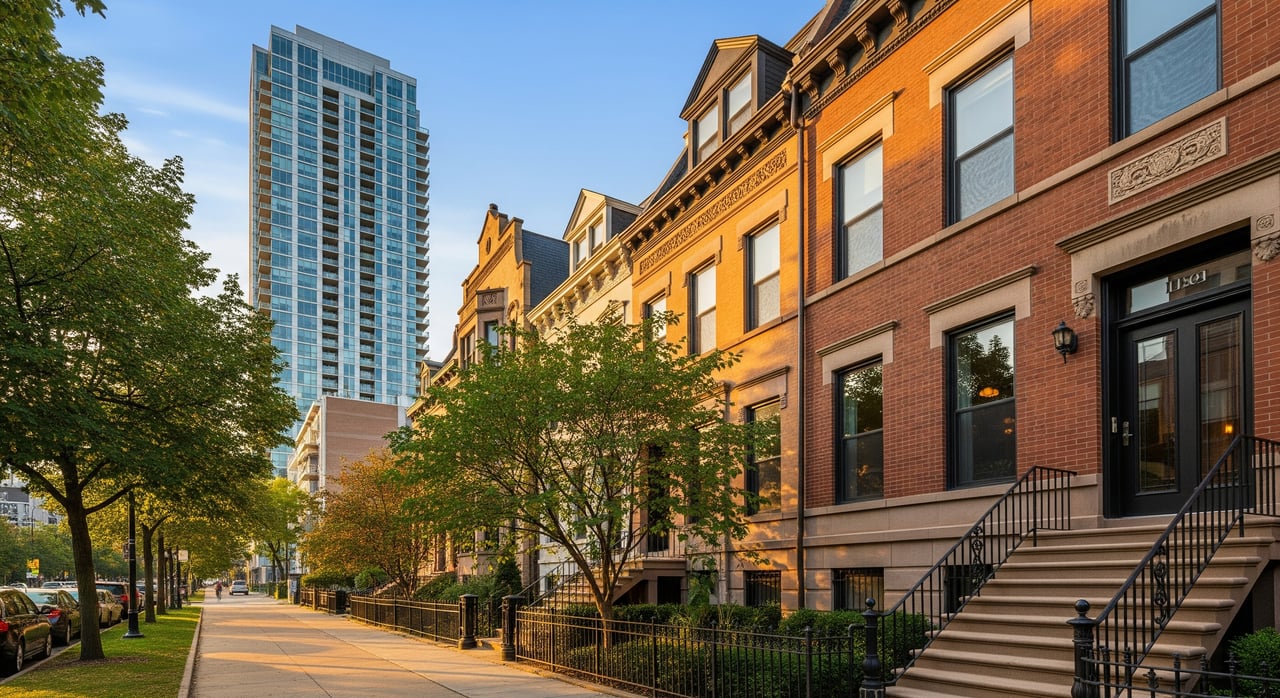
- Multi-level living with bedrooms above and living space on the main floor. Often include a garage or basement level and may feature roof decks. These provide a single-family feel with a private entrance.
Stacked townhomes
- Modern, attached units that live like townhomes but can be organized as condos. Expect open-concept kitchens, integrated parking, and outdoor terraces or roof decks.
What to evaluate inside any unit:
- Stairs and accessibility, storage locations, window exposure and street noise, elevator vs. walk-up, and the age and condition of mechanicals.
Lifestyle fit: condo vs. townhome
Start with how you want to live day to day.
- Choose a condo if you want low maintenance, shared amenities, and services that simplify city living.
- Choose a townhome if you want more private outdoor space, a garage, and control over the exterior and layout.
- If you want historic character and can accept stairs and limited parking, vintage condo conversions can be a match.
- If flexibility matters, verify condo rental rules. Some associations have limits on rentals, including short-term policies.
Buyer decision checklist
Use this list to compare specific properties and narrow your search.
- Lifestyle and layout
- Prefer one-floor living or multi-level living?
- Need a private entrance or do you value building amenities more?
- Parking and outdoor space
- How important is private or deeded garage parking?
- Do you want a yard, terrace, or roof deck?
- Budget and ongoing costs
- What is your target total monthly number, including HOA and utilities?
- Are you comfortable with potential special assessments if reserves are low?
- Ownership and rules
- Is it fee-simple or a condominium association? Review bylaws, budget, minutes, insurance, rental rules, and pet rules.
- For townhomes, confirm exterior maintenance responsibilities and any shared alley or driveway agreements.
- Practical details
- Storage needs, noise exposure, elevator access, and moving logistics.
- Renovation and resale
- If you plan to renovate, review permit history and any HOA architectural review process.
Touring steps and next moves
- Get preapproved to set your price range.
- Build a prioritized feature list: parking, outdoor space, layout, HOA tolerance, and amenities.
- Ask your agent to filter for product type, included parking, and HOA fee ranges.
- Bring the document request list to each tour: condo budget and minutes, reserve study, tax history, master insurance summary, condo questionnaire, or plat and easement details for townhomes.
- Ask about recent or pending capital projects: roof, facade, tuckpointing, elevator, or mechanical systems.
- Confirm who pays for each utility and how it is metered.
- Compare total monthly costs across finalists instead of focusing only on purchase price.
Local due diligence to consider
- Association governance: Review the budget, reserve study, insurance, and minutes from the last 12 to 24 months.
- Permits and code: For renovations or roof decks, check City of Chicago Department of Buildings records.
- Parking rules: Review residential permit requirements and block-level restrictions through the city’s parking program.
- Property taxes: Confirm assessed value and recent tax bills with the Cook County Assessor.
The bottom line
Both condos and townhomes in Lake View can be great choices. Your answer comes down to control versus convenience, private space versus shared amenities, and how you want to budget for monthly costs and long-term maintenance. If you want help tailoring the search to your lifestyle and budget, our North Side team is ready to guide you from shortlist to closing.
Ready to explore the right fit in Lake View? Connect with the neighborhood experts at Cadence Realty to compare options, set up tours, and review association documents with confidence.
FAQs
What is the main difference between condo and townhome ownership in Lake View?
- Condos involve owning your unit and sharing common areas through an association, while townhomes can be fee-simple or part of a condo-style HOA. Always verify the legal structure in the listing.
How do HOA fees for Lake View condos typically work?
- Condo dues usually fund building insurance, exterior upkeep, common utilities like water, and services such as snow removal and trash, plus amenities where offered. Details vary by building.
Do most Lake View townhomes include garage parking?
- Many do include private or attached garages accessed via alleys, but not all. Confirm whether parking is included, deeded, or available for an extra fee.
Are special assessments common in condo buildings?
- They can happen when reserves are low or major projects arise, such as roof or facade work. Review the budget, reserve study, and recent meeting minutes for clues.
Which is better for private outdoor space in Lake View: condo or townhome?
- Townhomes typically offer more private outdoor area, such as small yards or roof decks. Condos may provide balconies and shared rooftop spaces instead.
How should I compare total monthly costs between properties?
- Add mortgage, taxes, insurance, HOA dues, utilities, and any parking fees to create a single monthly figure. Use that number for apples-to-apples comparisons.