Touring North Center and torn between a cozy Chicago bungalow and a stately greystone? You’re not alone. Both styles carry history, character, and practical tradeoffs that affect how you’ll live, renovate, and maintain the property. In this guide, you’ll learn how these homes differ in layout, lot use, maintenance needs, and what to watch for on showings so you can choose with confidence. Let’s dive in.
North Center styles in context
North Center blends early 20th-century single-family homes with classic two-flats and three-flats. Bungalows were built mostly in the 1910s through 1930s during Chicago’s single-family housing boom tied to streetcar and rail access. Greystones arrived earlier and through the same era, from the 1880s into the 1930s, as masonry rowhouses and low-rise multi-unit buildings with gray stone facades.
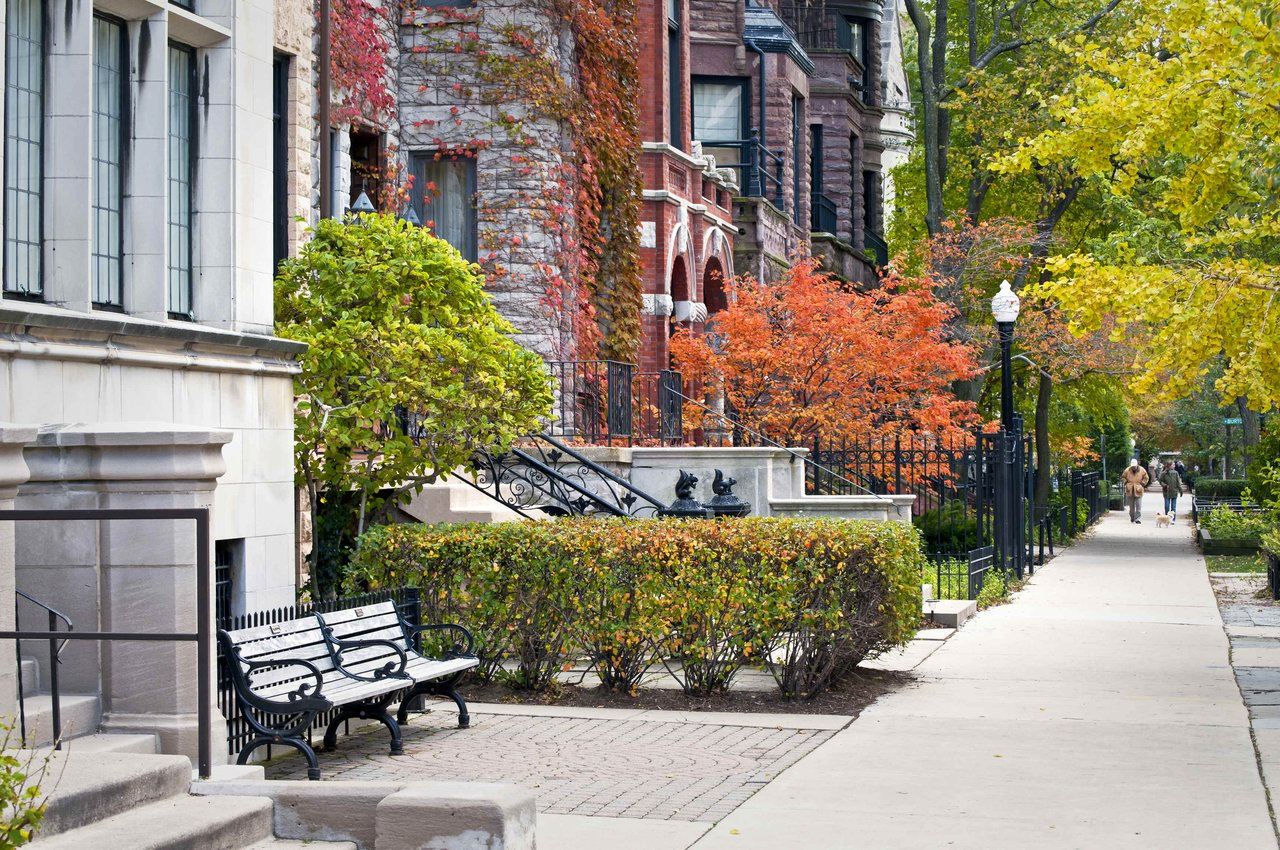
You’ll see these styles across areas often referred to as Northcenter, Ravenswood, and Roscoe Village. Some blocks include narrow-lot masonry buildings next to bungalows on wider parcels. If you plan exterior changes, confirm whether the property sits in a designated historic district, since landmark rules can affect materials, windows, and permitting through the City of Chicago’s Commission on Chicago Landmarks.
What makes a Chicago bungalow
Exterior and lot
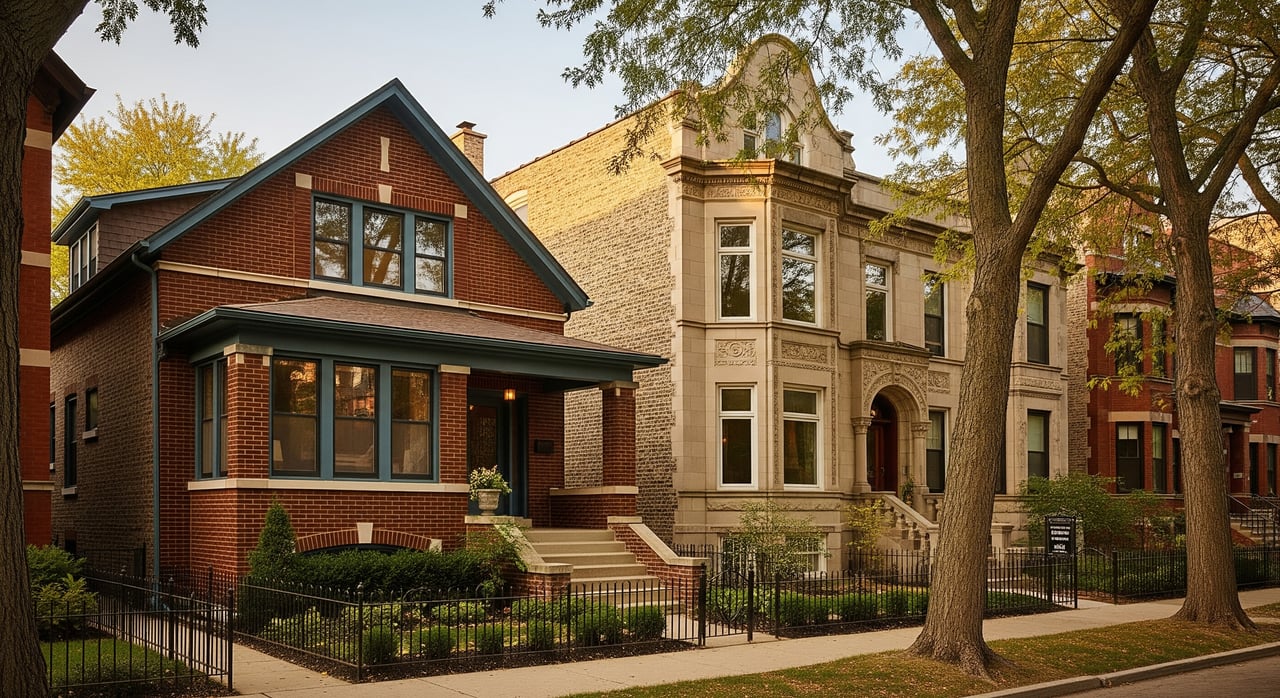
A typical bungalow has a low-pitched gabled roof, often with a front gable and dormer. Brick construction is common, and porches may be full-width or recessed. These homes are usually detached or semi-detached on wider lots, offering front and back yards.
Interior layout and character
The main level usually includes the living room, dining room, and kitchen, with bedrooms upstairs or in a half story. Expect original details like built-ins, oak floors, leaded glass, and geometric tile. Many have full basements that add storage or potential living space if finished to code.
Systems and envelope
Older bungalows may retain original windows and plaster with modest insulation. Mechanical systems are often upgraded over time. Energy improvements often focus on attic insulation, air sealing, and modern HVAC.
What defines a greystone
Exterior and lot
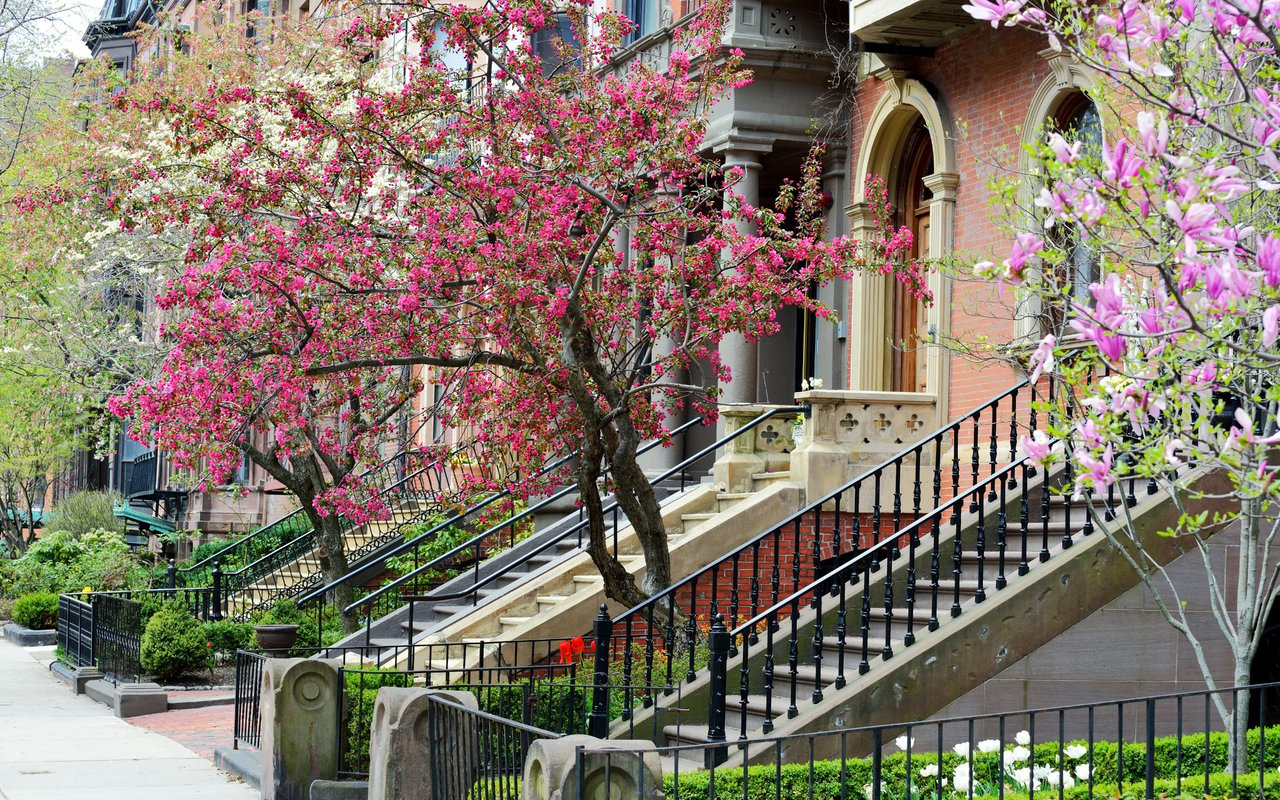
Greystones feature gray stone facades, elevated stoops, projecting bays, and decorative stonework. They often sit on narrower urban lots, sometimes in rowhouse or semi-attached configurations. Private yard space is more limited, with alley access for utilities and parking.
Interior layout and character
Many greystones were built as two-flats or three-flats, with one unit per floor. When converted to single-family use, you’ll see vertical floor plans with internal stairs linking levels. Interiors often have high ceilings, tall windows, and formal parlors.
Systems and envelope
Heavy masonry walls and older window types are typical. Tuckpointing, stone repair, and coping maintenance are frequent needs. Foundations are generally cast or poured, and window restoration or replacement must be handled carefully, especially if the building is landmarked.
Key differences to consider
- Private outdoor space: Bungalows often offer larger private yards. Greystones typically occupy narrower lots with smaller yards.
- Unit layout and flexibility: Bungalows are usually single-family homes. Greystones are often multi-unit by design, which can support rental income or allow for conversion.
- Interior feel: Greystones tend to have higher ceilings and more formal rooms. Bungalows emphasize efficient, compact layouts with built-ins.
- Maintenance focus: Greystones demand regular masonry and stonework care. Bungalows often require attention to roofs, porches, and basements.
- Renovation complexity: Greystones can be constrained by narrow floorplates and multi-unit codes. Bungalows may allow easier lateral additions and basement finishing, subject to zoning.
Renovation and maintenance essentials
Structure and envelope
Both styles need careful masonry attention. Repointing quality affects water management and long-term durability. Inspect basements for water intrusion, cracks, and drainage issues, and ask about sump pumps, backflow preventers, and any history of flooding.
Roofs and porches deserve close review. Older roofs may be near the end of their service life. Original wood porches can develop rot or structural wear that require repair or replacement.
Mechanical systems and energy
Electrical systems in older homes may include knob-and-tube wiring or outdated panels. Budget for modern upgrades during remodeling. HVAC and insulation improvements can significantly improve comfort, but placement of ductwork may be challenging in narrow greystone footprints.
Window choices affect energy performance and historic character. In landmark areas, replacement may be regulated. Repair, weatherstripping, and storm windows are common compromises that improve comfort while preserving original fabric.
Code, zoning, and permits
Greystones that are multi-unit must meet egress and fire separation standards. Converting to single-family or altering unit counts requires zoning and building permits. Bungalows are typically single-family, and additions or accessory units are guided by lot coverage and local zoning rules. Significant interior or exterior work, including electrical, plumbing, and many window or door changes, generally requires City of Chicago permits. Historic review may apply in landmark districts.
Common hazards
Homes built before 1978 may contain lead paint. Asbestos can be present in older mechanical systems and insulation. Moisture management is essential in Chicago’s freeze-thaw climate, so check grading, gutters, and downspouts.
Cost and phasing
Budgets vary widely by scope. The big drivers usually include foundation repair, full mechanical replacements, whole-house electrical work, masonry repointing and stone repair, and roof or porch reconstruction. Many owners address structural and systems first, then focus on kitchens, baths, and restoration of original details.
What to look for on a showing
Shared checks
- Exterior: roof age and condition, sagging or patched areas, and working gutters and downspouts.
- Foundations and grading: settlement cracks, water stains, and whether the grade slopes away from the building.
- Water intrusion: efflorescence on masonry, peeling paint near grade, and any basement odor or visible mold.
- Mechanicals: furnace and water heater age, presence of central AC, location and capacity of the electrical panel.
- Interior: floor and ceiling levelness, stair alignment, and door and window operation.
- Walls and finishes: hairline versus structural cracks, and any plaster delamination.
- Basement: moisture signs, finished areas without proper egress, sump pump condition, and mechanical locations.
- Attic: insulation level, ventilation, and any roof deck issues.
- Safety: evidence of knob-and-tube wiring, ungrounded outlets, older oil tanks, asbestos in mechanicals, and lead paint, especially on trim.
- Functional: storage, closet sizes, yard usability, alley access, and garage condition.
Bungalow specifics
- Porch structure: check for settlement, wood rot, and potential unpermitted enclosures.
- Dormers and half-story: confirm headroom and usable floor area upstairs.
- Basement conversions: look for egress windows and whether finished rooms appear properly permitted.
Greystone specifics
- Stoop and entry: confirm stone and stair soundness and railings.
- Unit configuration: if multi-unit, note separate meters, kitchen and bath counts, and any tenant occupancy or lease terms.
- Vertical circulation: stair width, tread and riser condition, and handrails, especially if considering a single-family conversion.
- Party walls and shared systems: identify shared utilities, roof responsibilities, and how water and infrastructure lines run.
Ownership, financing, and income potential
Greystones are often multi-unit, which can create rental income. If you plan to live in one unit and rent others, financing and down payments can differ from a typical single-family loan. Bungalows are often single-family, with financing that follows standard owner-occupied guidelines.
Property taxes vary by neighborhood, lot size, and improvements. Landmark or historic designations can affect design reviews and sometimes access to incentives, but they do not automatically change taxes. Insurance for older masonry construction and basements may involve specific coverage for flooding or sump pump backup, so confirm with your insurer.
Short-term rentals and unit conversions are regulated by local ordinances. Always verify zoning, unit counts, and permitted uses with the city before you make plans.
Smart questions to ask on a tour
- How long has the seller owned the property, and what major renovations were done and when?
- Are there open permits or any documented code violations?
- Has there been water intrusion or basement flooding? What drainage or pump systems are installed?
- What are the ages and service histories for the roof, furnace, AC, water heater, and electrical panel?
- If multi-unit: what is the current rent roll, when do leases expire, and which utilities do tenants pay?
- Is the property in a landmark district, and are there known facade restrictions?
- Are recent inspections, engineering reports, or pest and mold reports available?
Ready-to-send tour request
“I’m interested in scheduling a tour of [address]. Available times I can make are [two or three options]. Please confirm whether the seller will provide access to the basement, attic, and any utility closets during the showing, and whether there are current tenants. Also, could you provide recent permit records or inspection reports if available?”
If this is a multi-unit property, add: “If this is a multi-unit property, please send current rent rolls, lease copies, and information on utility metering.”
Which style fits your day-to-day
If a private yard, a compact and efficient layout, and a classic front porch appeal to you, a bungalow may be the better fit. If you prefer tall ceilings, formal rooms, and the option to live in one unit while renting another, a greystone could be the right move. In North Center, both types benefit from strong transit and neighborhood retail access, and properties with garages or alley parking can hold extra value where street parking is tight.
When you weigh character against maintenance and renovation scope, focus first on structure, systems, and water management. Then plan your upgrades in phases so you maintain the home’s original charm while improving comfort and efficiency.
Ready to compare specific homes or plan a renovation path? Connect with the local team that knows North Center’s housing stock inside and out. Schedule a concierge consultation with Cadence Realty to map your next steps.
FAQs
What defines a Chicago bungalow in North Center?
- A low-pitched gabled roof, brick construction, a porch, a main level with living-dining-kitchen, bedrooms in a half story, and a full basement are typical.
Are Chicago greystones always multi-unit buildings?
- Many were built as two-flats or three-flats, though some have been converted to single-family homes with vertical floor plans.
What inspections are most important for older Chicago homes?
- Focus on masonry and tuckpointing, roof and porch structure, basement moisture and drainage, electrical system age, HVAC, insulation, and window condition.
How do landmark districts affect renovations?
- Exterior changes such as windows, facade work, and some materials may require additional review, so verify status with the City of Chicago’s landmark commission before planning work.
Can I add a unit or convert a greystone to single-family?
- Changes to unit counts and major alterations are governed by zoning, building code, and egress and fire safety rules, and will require proper permits.
What should I look for in a basement during showings?
- Signs of water intrusion, sump pumps or backflow preventers, proper egress for finished areas, and any cracks or odors indicating moisture issues.